
Vienna Previous-Resident Sources
A backward address trail needs sources matched to the era. The assessor and current deed offer the modern starting point. Clerk books and archival microfilm reach much farther back. Regional directories can place a household at an address in a printed year, while newspapers and probate papers help explain a move, death, estate, or sale.
| Source | Years represented | Where held | What it can show |
|---|---|---|---|
| Deeds and liens | 1799 to present stated | Wood County Clerk | Transfer parties, legal description, book/page |
| Archived deed index and deeds | Index 1798-1969; deeds 1802-1901 | West Virginia Archives microfilm | Older recorded ownership trail |
| Land books | 1802-1900 catalog; courthouse from 1945 | FamilySearch, assessor, courthouse | Yearly tax ownership and assessment clues |
| Vienna-including directories | Uneven runs from 1914-1960 | Regional reels and libraries | Dated name, address, household notation |
| Later Parkersburg directories | Overlapping runs through 1985 | WVU Regional History Center | Possible Vienna entries, checked volume by volume |
| Local newspapers | 1872-2023 across two titles | Kothe Memorial archive | Obituaries, notices, address and business clues |
| County clerk collection | 1785-1935 | WVU A&M 0458 | Wills, appraisements, settlements, bills of sale |
Start with the row closest to the target year, then test it against another kind of record. A deed is not proof of occupancy. A directory is not proof of ownership. Keeping that distinction protects the history from a confident but false conclusion.
Build a Vienna House Timeline
Create one line for each dated event, not one line for each person found. Record the source title, exact date or volume year, address as printed, parcel or book reference, name, and what the item truly establishes. This makes gaps visible and prevents an undated web result from filling decades it cannot support.
A practical flow is: current address → parcel ID → legal description → current deed → prior deed → tax or land book → dated directory → newspaper or probate evidence. The legal description is the thread when house numbers, road labels, or boundary terms differ.
The West Virginia assessment model may display parcel history, sale data, owner address, book/page, acreage, and several years of values. Those are candidate dates. Open the deed before writing a transfer into the timeline, since an assessment summary is not the recorded instrument.
Reverse Vienna's Deed Chain
The Wood County CAMA system supplies the current owner, situs, map and parcel, legal description, and deed book and page. Use those details to enter the Wood County Clerk index. The clerk's system has deed, lien, will, and miscellaneous groups, plus grantor, grantee, direct, reverse, and book filters.
- Save the present parcel ID, owner, legal description, and deed reference from assessment.
- Open the current purchase deed and note both parties, date, book/page, and every prior instrument it cites.
- Search the seller as a grantee to find when that party acquired the same land.
- Match the legal description, not merely the surname or house number, before accepting the prior deed.
- Repeat until the online trail ends, then continue at the courthouse, off-site land books, or archives.
- Grantor
- The party conveying the recorded interest, often the seller.
- Grantee
- The party receiving the recorded interest, often the buyer.
- Chain of title
- The linked sequence of recorded interests in the same land.
- Legal description
- The lot, addition, metes, bounds, or other land wording that outlasts a common address.
The clerk does not perform a title search. Researchers may inspect indexes and books or hire a title professional. Copies are listed at $1.50 for the first two pages and $1 for each added page, though the office should confirm the fee for the exact record.
Wood County Records Outlast Labels
Wood County was formed in 1798, and Parkersburg is the county seat. That is why a Vienna house trail often leads outside the city. Clerk holdings state deeds and liens from 1799, marriage material from 1801, and land books at the courthouse from 1945, with older volumes off-site. Archives microfilm fills many earlier stretches.
Vienna itself incorporated in 1935. The 1950 Census report recorded parts of Parkersburg and Williams districts annexed to Vienna in 1949. An older record may therefore use a tax district or nearby place where a modern reader expects Vienna. Do not rewrite the historical location. Preserve it, then explain the later boundary link.
No official source inspected for this project verified a citywide street-renumbering date. A changed number remains an open question until the deed description, lot, plat, or parcel trail joins the old address to the new one. This is a useful comparison: a modern postal label is convenient, but a recorded land description has more force in a long house history.
Vienna Directories Mark Occupancy
The regional directory run is uneven. Gale's reel catalog identifies Parkersburg directories that include Vienna in several sequences between 1914 and 1960, with explicit missing years. WVU lists Parkersburg microfilm in overlapping runs from 1925 through 1985, but Vienna inclusion must be checked in each volume. Do not turn these catalogs into a claim that every year or household is present.
A directory may print a surname and given name, spouse notation, street address, job or firm, phone exchange, and symbols for an owner, renter, widow, or boarding house. The abbreviation key and page header matter. Nearby communities can appear in one volume, and a printed listing only supports an appearance in that directory year.
- Choose a directory year near a recorded deed or assessment event.
- Search both the resident's name and the address section, if the volume has one.
- Transcribe the entry, abbreviation key, page, year, and neighboring lines.
- Check the nearest released federal census schedule for the household and enumeration place.
- Add a newspaper, obituary, probate, or tax source before claiming continuity.
The detailed holdings and missing years belong with the Vienna city directory collection. For previous residents, the key point is how a dated entry fits between recorded transfers.
Vienna Research Has Local Help
Vienna Public Library stands at 2300 River Road and holds a regional West Virginia history collection, though its directory years are not published online. The Parkersburg and Wood County Public Library genealogy service accepts remote requests by email and mail. It lists a $2 minimum research fee, ten-cent photocopies, a limit of five requests, and specific details needed for each request.
That service is useful when a catalog proves a volume exists but its pages sit on microfilm or behind subscription access. Ask for one person, one address, one year range, and one named source. Include spelling variants and the historic district when known. Broad requests to find everyone who ever lived at a house are less likely to receive a clear answer.
The library genealogy page sets out the remote route.
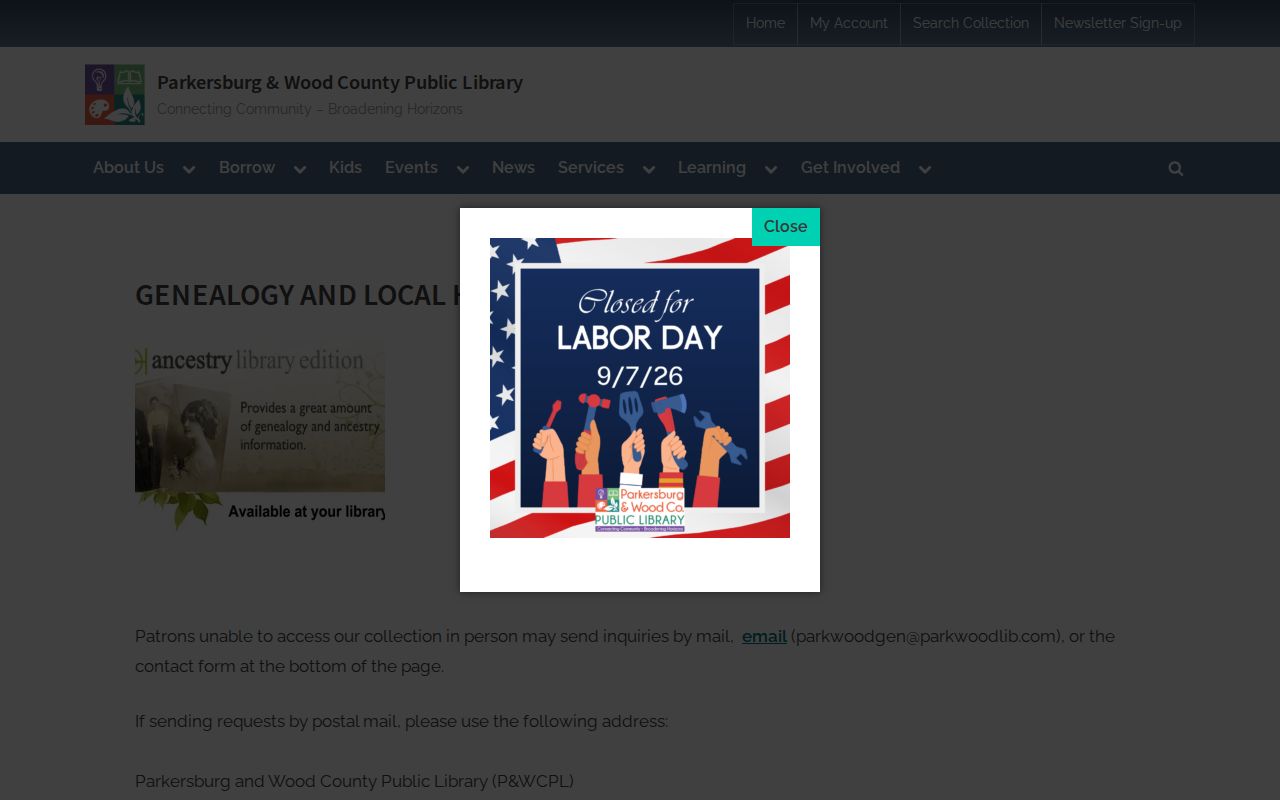
The captured page offers a human fallback when no public directory scan can be opened at home.
Newspapers Explain Vienna Transitions
The Kothe Memorial archive covers the Parkersburg Eclipse from 1872 through 1969 across 26,900 pages and the Eclipse News Review from 1969 through 2023 across 41,210 pages. It supports searches for people, places, and events with date filters. That depth makes it a strong source for previous residents after a deed, directory, or probate file supplies a firm name and date.
Search the full address, surname, street without its road type, an older district label, and a nearby local anchor. Vienna terms such as Vitrolite, the electric railway, Grand Central Avenue, Spencer's Landing, or the former Johns Manville site can help with OCR that missed a street line. Public notices, obituaries, estate sales, and business announcements may explain why a household changed.
OCR can miss worn type and broken columns. Open the page image and read the surrounding text. A newspaper is supporting context, not an official ownership roll, and a death notice should be checked against probate or vital material where the conclusion depends on it.
Vienna Estates Close Gaps
Probate can explain a transfer that does not resemble a normal sale. Wood County handles estates in the county where the deceased person lived. Clerk forms include will filing, appraisement, ancillary proceedings, and small-estate material. An appraisement or inventory is due within 90 days in the process described by the clerk.
Search the will and miscellaneous index for the name connected to the address, then compare probate orders or fiduciary books with the deed. The WVU Wood County collection, A&M 0458, holds county and circuit clerk material from 1785 to 1935 in 166.5 linear feet and 216 microfilm reels. Its inventories, wills, appraisements, settlements, and bills of sale can continue a trail beyond the easy web index.
The Wood County Historical and Preservation Society also operates the Phelps-Tavenner Research Center and Resource Barn at 2401 Camden Avenue in Parkersburg. The center is a circa-1800 structure, and its local-history holdings offer a useful physical bridge between the county's early records and Vienna family research.
Map the Earlier Vienna House
Plats and tax maps can reconnect an old lot to today's parcel. A plat shows recorded lot geometry, streets, and easements. Land books track tax ownership or assessment by year. FamilySearch catalogs Wood County land books from 1802 to 1900 on sixteen microfilm reels, while access to images may require an account or affiliate location.
Sanborn fire-insurance maps can add building footprints, materials, use labels, sheet numbers, and dates when a local edition exists. No verified Vienna-specific edition was found in the official search. Use the Library of Congress Sanborn guide and library catalogs to check Parkersburg or Vienna, but label this as a search route, not a known Vienna holding.
The official guide shows how Sanborn records are described.
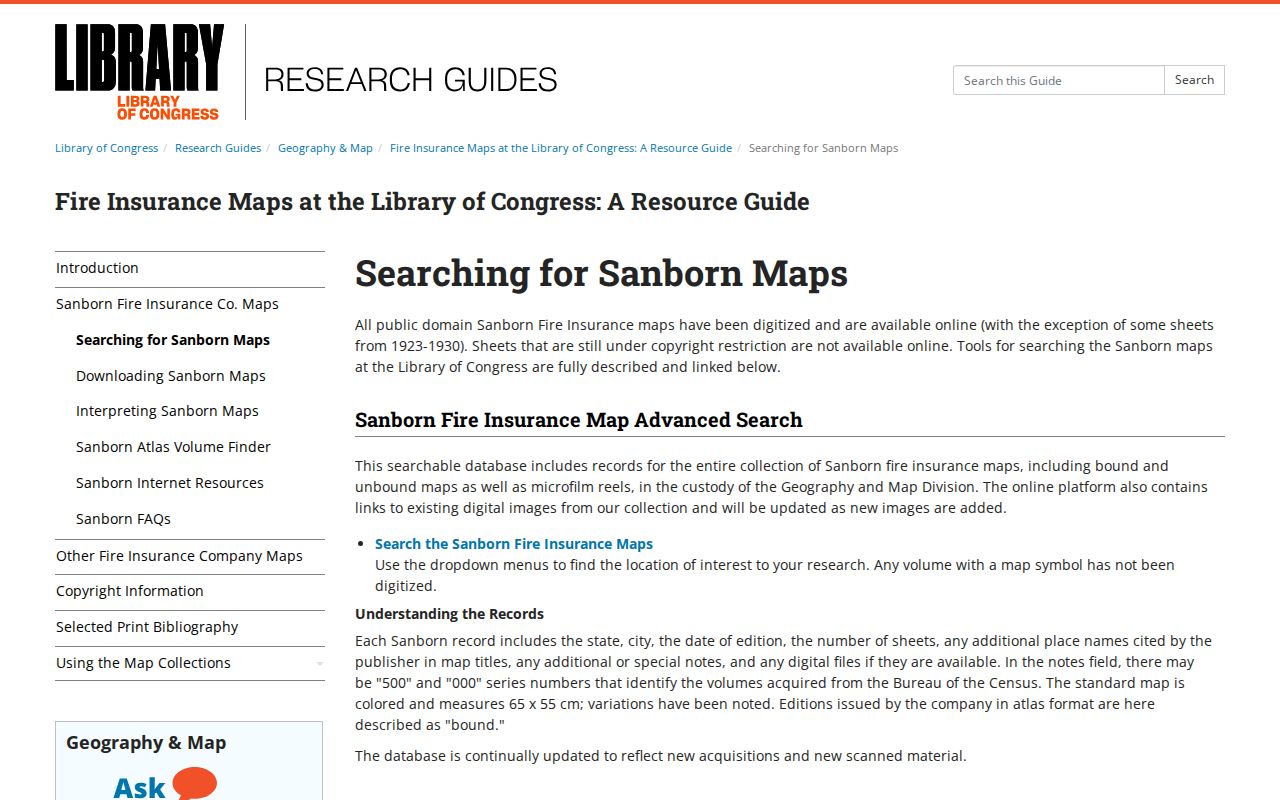
A building footprint gives historic context. It is not a legal boundary and does not name the people who occupied the structure.
Verify Vienna Previous Residents
Evidence strength depends on the claim. For ownership, cite the deed, parties, date, book/page, and legal description. For occupancy, cite a dated directory or census entry exactly as printed. For a life event or reason for a transfer, use probate, a certificate or index allowed by law, and a newspaper as context.
A useful conclusion might say that a person appears at the address in a particular directory year while another party held recorded title. That preserves the difference between residents and owners. It also allows for relatives, renters, businesses, vacant parcels, and owners whose tax mail went somewhere else.
Lawful use. Research previous residents for genealogy, estate work, property history, or personal curiosity. Do not use an old address trail to harass, threaten, or track a living person.
West Virginia also offers an Address Confidentiality Program for qualifying survivors who need a substitute public address. Respect that safety measure. A missing modern address may be intentional, not a flaw to defeat. Cite each source and stop where the public evidence stops.